How do LED Screens Work?
We recalling what I know. LED stands for Light Emitting Diode, right? So, LED screens must use these diodes to produce light. But how exactly do they create the images we see?
LED screens are made up of pixels. Each pixel is a tiny dot that emits light. In LED screens, each pixel is made up of LEDs. Wait, but aren't there different colors? So maybe each pixel has red, green, and blue LEDs? Because combining those colors can make any color. Yeah, that makes sense. So by varying the brightness of each of these colored LEDs, you can create different colors.
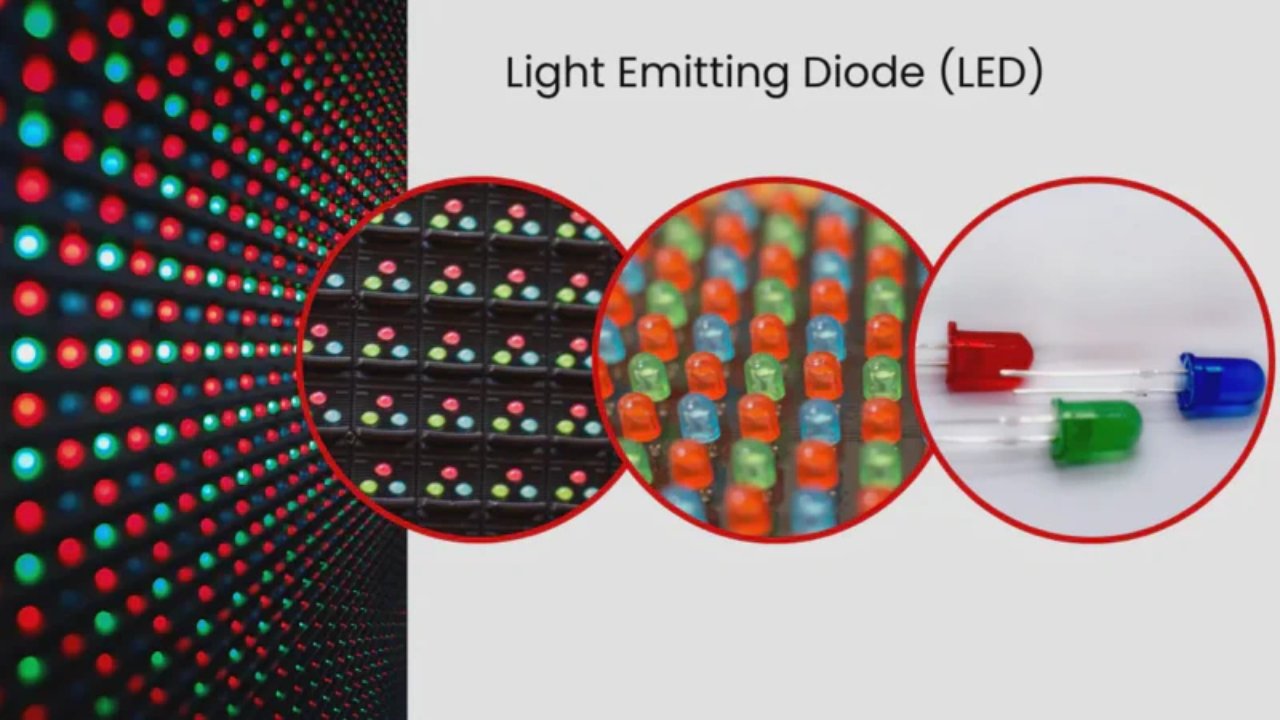
But how do they arrange the LEDs? Are they all individual tiny diodes packed closely together? That must be the case for high-resolution screens. The more LEDs per inch, the higher the resolution. But I wonder, how small can these LEDs be? I know that in some screens, like the ones in stadiums, the LEDs are bigger and more spaced out, which is why you can see the individual dots from up close. But for TVs or smartphones, the LEDs must be super tiny.
Wait, there's also something called an LED-backlit LCD screen. Is that different from a true LED screen? I think so. Because in LCDs, the LEDs are just the backlight, and the liquid crystals block or allow light through. But true LED screens, like OLED or maybe MicroLED, have each pixel emitting its own light. So maybe there's a distinction here between different types of LED screens.
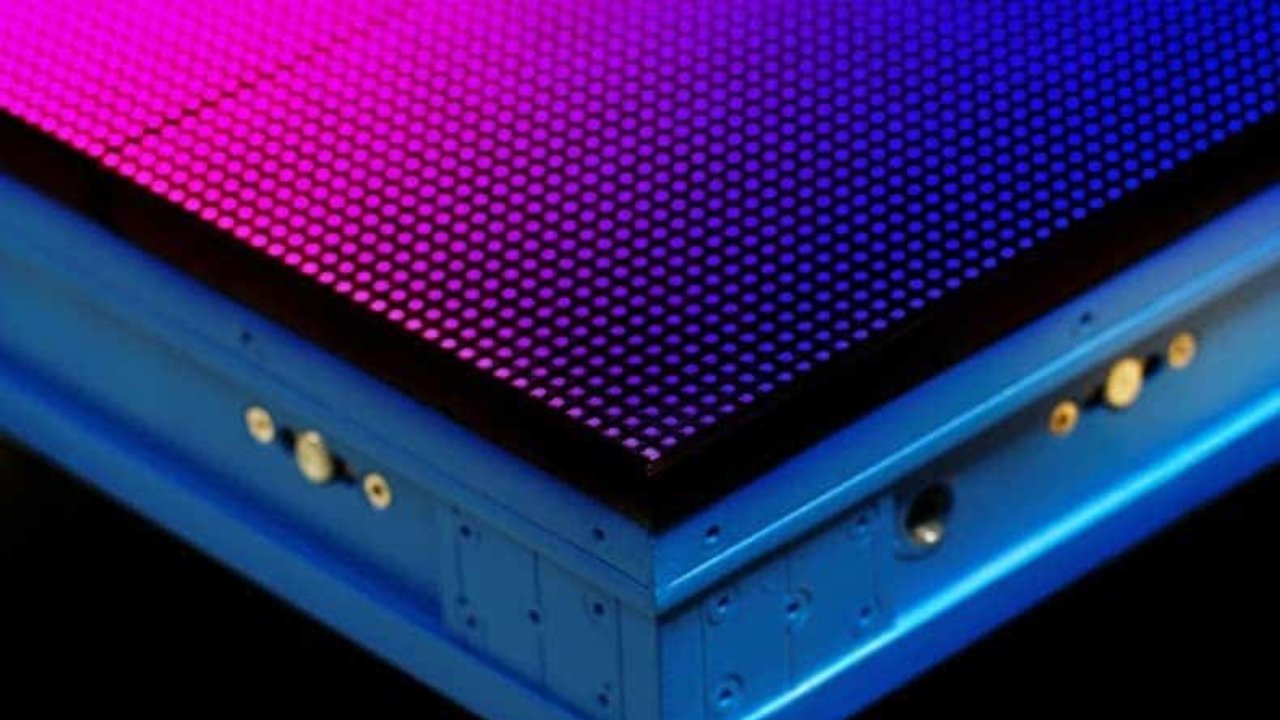
So OLED is Organic Light Emitting Diode. Each pixel is an organic compound that lights up when electricity is applied. That allows for true blacks because the pixels can turn off completely. But traditional LED screens, like the ones used in billboards, might use regular LEDs, not organic. Then there's MicroLED, which is newer, using inorganic materials and even smaller LEDs for higher efficiency and brightness.
But focusing on the basic LED screen: Each pixel has red, green, blue LEDs. The screen is a grid of these pixels. To display an image, each LED's brightness is controlled individually. The combination of these three colors at different intensities creates the full-color image. But how is the intensity controlled? Is it through varying the voltage or using pulse-width modulation (PWM), where the LED is turned on and off rapidly to simulate lower brightness?
Also, how does the screen receive the image data? There must be a controller that takes the video signal and translates it into commands for each LED. The controller would determine which LEDs to turn on and at what brightness. Then there's the circuitry connecting all these LEDs. Since there are millions of pixels in a high-res screen, the wiring must be complex. Maybe using a matrix layout where rows and columns are addressed to reduce the number of necessary connections.
Wait, but if each LED is individually addressable, that would require a lot of connections. So maybe they use a grid system where each row is activated one at a time, and the columns provide the data for that row. This is similar to how some displays multiplex the signals to handle many pixels without individual wiring for each.
Another thing: LED screens can be either passive matrix or active matrix. Passive matrix might be simpler but slower, leading to lower image quality, while active matrix uses a thin-film transistor (TFT) for each pixel, allowing faster response times and better color accuracy. So modern LED screens probably use active matrix technology.
Then there's the refresh rate, which is how quickly the screen can update the image. Higher refresh rates mean smoother motion. This would depend on how fast the controller can update the LEDs' states.
Also, color depth: how many bits are used per color channel. More bits mean more shades of each color can be displayed, leading to smoother gradients and more realistic images.
But wait, how do they achieve different colors? For example, if a pixel has red, green, and blue LEDs, each can be set to a certain brightness level. The combination of these three gives the perceived color. So if red is at full brightness, green at half, and blue off, the pixel would appear orange. That's additive color mixing.
What about the physical structure? The LEDs are mounted on a substrate, maybe a printed circuit board (PCB). For flexible screens, like some OLED displays, the substrate is flexible plastic. But traditional LED screens are rigid. The LEDs are protected by layers, maybe a diffuser to spread the light evenly, and a cover glass or plastic on top.
Power consumption: LEDs are generally energy-efficient, which is why LED screens can be brighter without using too much power. But with millions of LEDs, the total power can still be significant, especially for large screens.
Heat management is another factor. LEDs generate heat, so there must be heat sinks or other cooling mechanisms in place, especially for large outdoor displays.
Then there's the difference between SMD (Surface Mount Device) LEDs and DIP (Dual In-line Package) LEDs. SMDs are smaller and used in high-density displays, while DIPs are larger and used in outdoor displays where brightness is more critical.
So putting it all together: An LED screen is made of an array of pixels, each containing red, green, and blue LEDs. The screen controller processes the input signal and controls each LED's brightness through electronic circuits, using techniques like PWM. The combination of colored lights at varying intensities creates the full-color image. The physical arrangement, addressing method, and technology (like active matrix) allow for high-resolution, bright, and efficient displays.
Wait, but I need to make sure I'm not confusing LED with OLED. In OLED, each pixel emits its own light, and there's no backlight. In traditional LED displays, especially LCDs with LED backlights, the LEDs are just the light source behind the liquid crystals. So when someone says "LED screen," they might actually be referring to an LED-backlit LCD, which is different from a direct LED display where each pixel is an LED. For example, most LED TVs are actually LCDs with LED backlights. True LED displays, like those huge outdoor screens, have each pixel as a cluster of LEDs.
So perhaps the answer should clarify that distinction. There are two main types: LED-backlit LCDs and direct LED displays (like billboards). The working principles differ. The user probably wants to know about direct LED displays, where each pixel is an LED cluster.
In direct LED displays, each pixel has R, G, B LEDs. The controller sends signals to each pixel to adjust brightness. The screen is divided into modules or panels, especially for large installations. These modules can be tiled together to form large screens. The controller handles the input signal, processes it (scaling, color correction), and drives the LEDs accordingly. The driving method could be constant current to maintain brightness consistency, and PWM for dimming.
Also, the viewing angle matters. Good LED screens have wide viewing angles, so the LEDs are arranged or covered with lenses to spread the light horizontally and vertically.
Hmm, I think I have a basic grasp now. Let me try to outline the key points step by step to structure the answer properly.
LED screens work by utilizing an array of light-emitting diodes (LEDs) to produce images. Here's a detailed breakdown of their operation:
1. Pixel Composition:
Each pixel in an LED screen comprises three sub-pixels: red (R), green (G), and blue (B) LEDs. By adjusting the intensity of these sub-pixels, millions of colors can be created through additive color mixing.
2. Types of LED Screens:
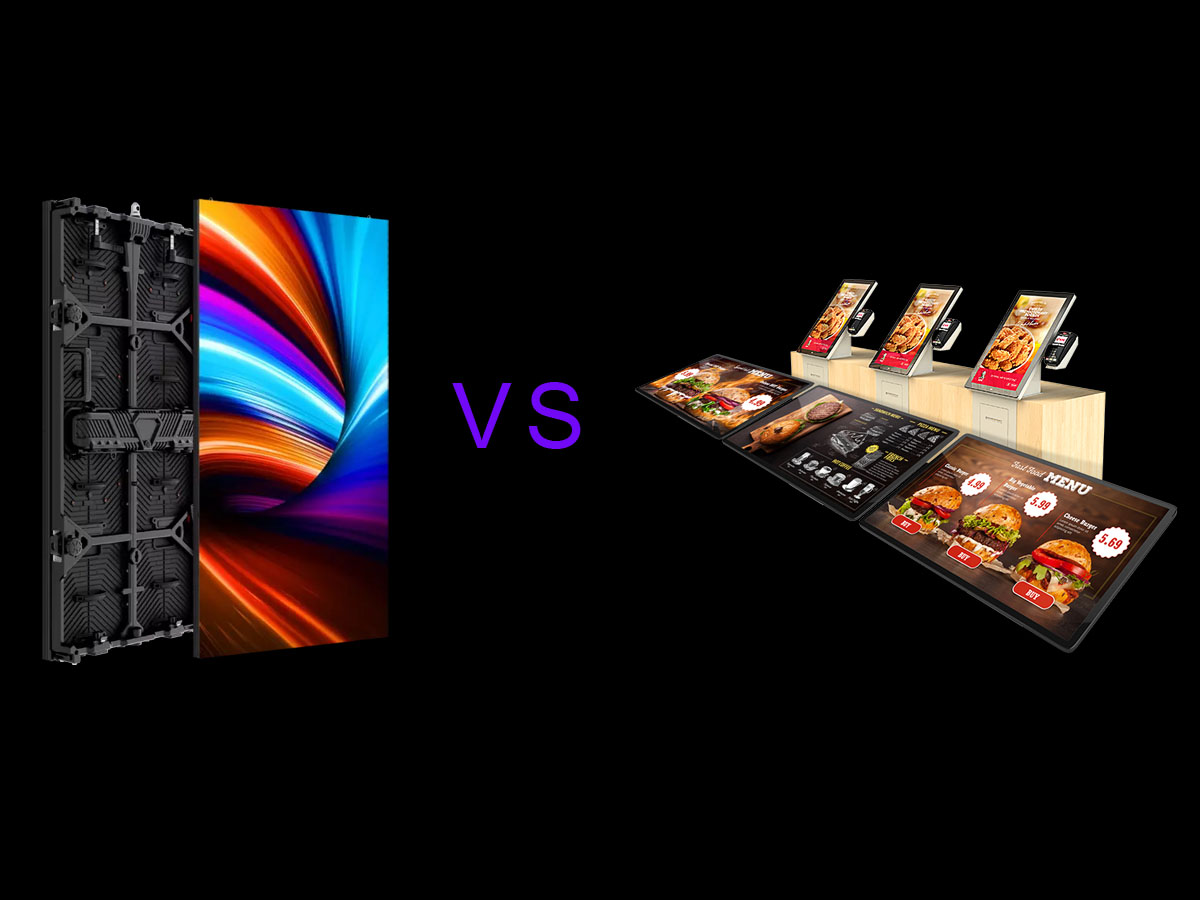
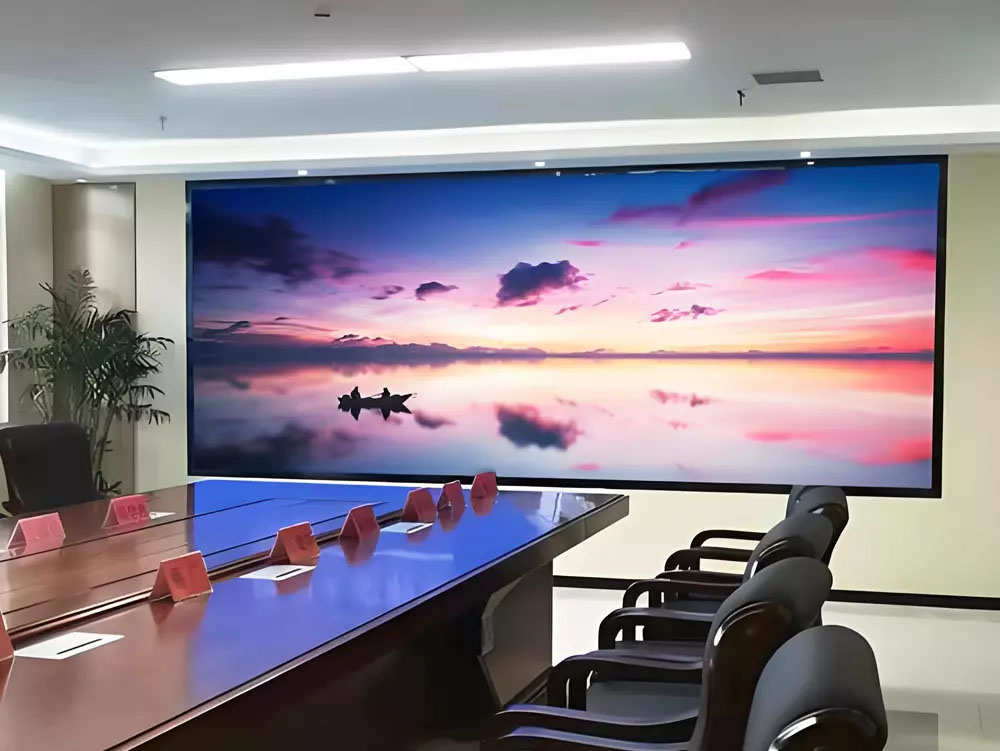
Direct LED Displays: Used in billboards, stadiums, and large screens. Each pixel is a cluster of discrete LEDs (SMD or DIP packages). These screens are modular and scalable.
LED-Backlit LCDs: Common in TVs and monitors. LEDs provide backlighting, while liquid crystals modulate light to form images (not true LED screens).
OLED/MicroLED: Advanced variants where each pixel emits its own light (OLED uses organic materials; MicroLED uses inorganic, smaller LEDs for higher efficiency).
3. Image Formation:
Controller & Driver Circuits: Process input signals (e.g., HDMI) and convert them into commands for individual LEDs. Active matrix technology (using TFTs) allows precise, rapid control.
Brightness Control: Achieved via pulse-width modulation (PWM) or varying current. PWM rapidly toggles LEDs on/off to simulate lower brightness.
4. Physical Structure:
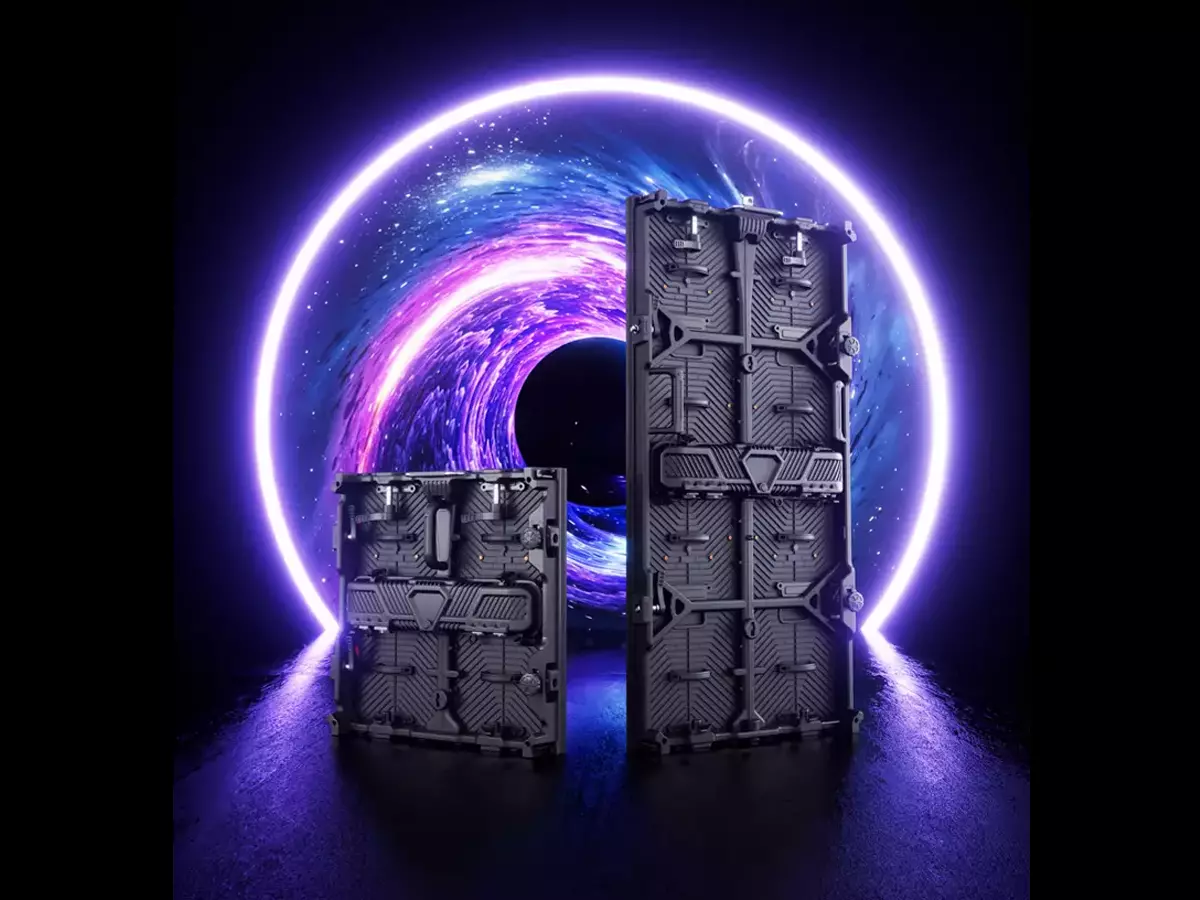
LED Modules: Large screens are built from modular panels, each containing an LED array. These are tiled together for scalability.
Lenses/Diffusers: Enhance viewing angles and light distribution. SMD LEDs are compact for high resolution; DIP LEDs are robust for outdoor use.
5. Color & Resolution:
Color Depth: Determined by bit-depth per sub-pixel (e.g., 8-bit = 256 shades per color). Higher bit-depth improves gradient smoothness.
Pixel Pitch: Distance between pixels dictates resolution. Smaller pitch = higher density (e.g., 1mm for fine detail vs. 10mm for billboards).
6. Power & Thermal Management:
LEDs are energy-efficient but generate heat. Heat sinks and passive/active cooling prevent overheating, especially in high-brightness outdoor displays.
7. Advantages:
Brightness & Contrast: Superior to LCDs, especially in direct sunlight.
Durability: Long lifespan with minimal degradation.
Flexibility: Modular designs allow curved or irregular installations.